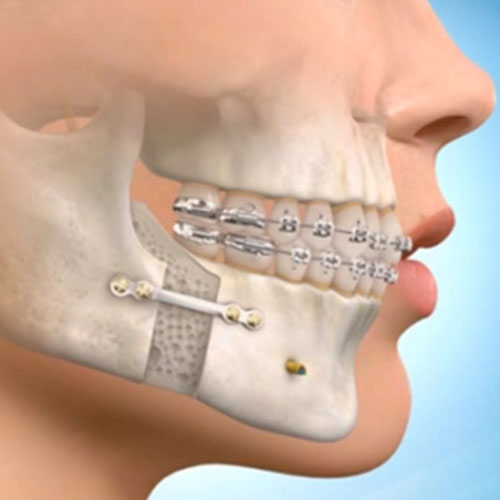
Jaw surgery can realign the jaw. It is also called orthognathic surgery. Jaw surgery may include upper or lower jaw surgery, or a combination of both, depending on your concerns and the surgeon’s personal assessment. The surgery is done from inside your mouth so there is no visible scar on your face.During jaw surgery, your jaws are repositioned and placed in their new position with screws and small plates under the gums, which are usually placed there for an indefinite period of time.
In some cases, treatment is planned to improve your chewing, with minimal change in your facial appearance. While in other cases, there will be more noticeable changes in the appearance of your face (for example, if you have a protruding lower jaw or a slightly receding lower jaw).
Some of the conditions that jaw surgery can help with include:
In some cases, treatment is planned to improve your chewing, with minimal change in your facial appearance. While in other cases, there will be more noticeable changes in the appearance of your face (for example, if you have a protruding lower jaw or a slightly receding lower jaw).
Some conditions that require jaw surgery
Correcting conditions that can affect the symmetry of your face.
Help reduce pain from Temporomandibular Joint (TMJ) disorder.
Repairing damage or congenital condition of the face, such as cleft palate, solving breathing problems such as mouth breathing, obstructive sleep apnea
Improved chewing, so that your teeth line up correctly when you close your mouth.
The best time for jaw surgery is when the jaw has stopped growing. Usually in late teens or early 20s.